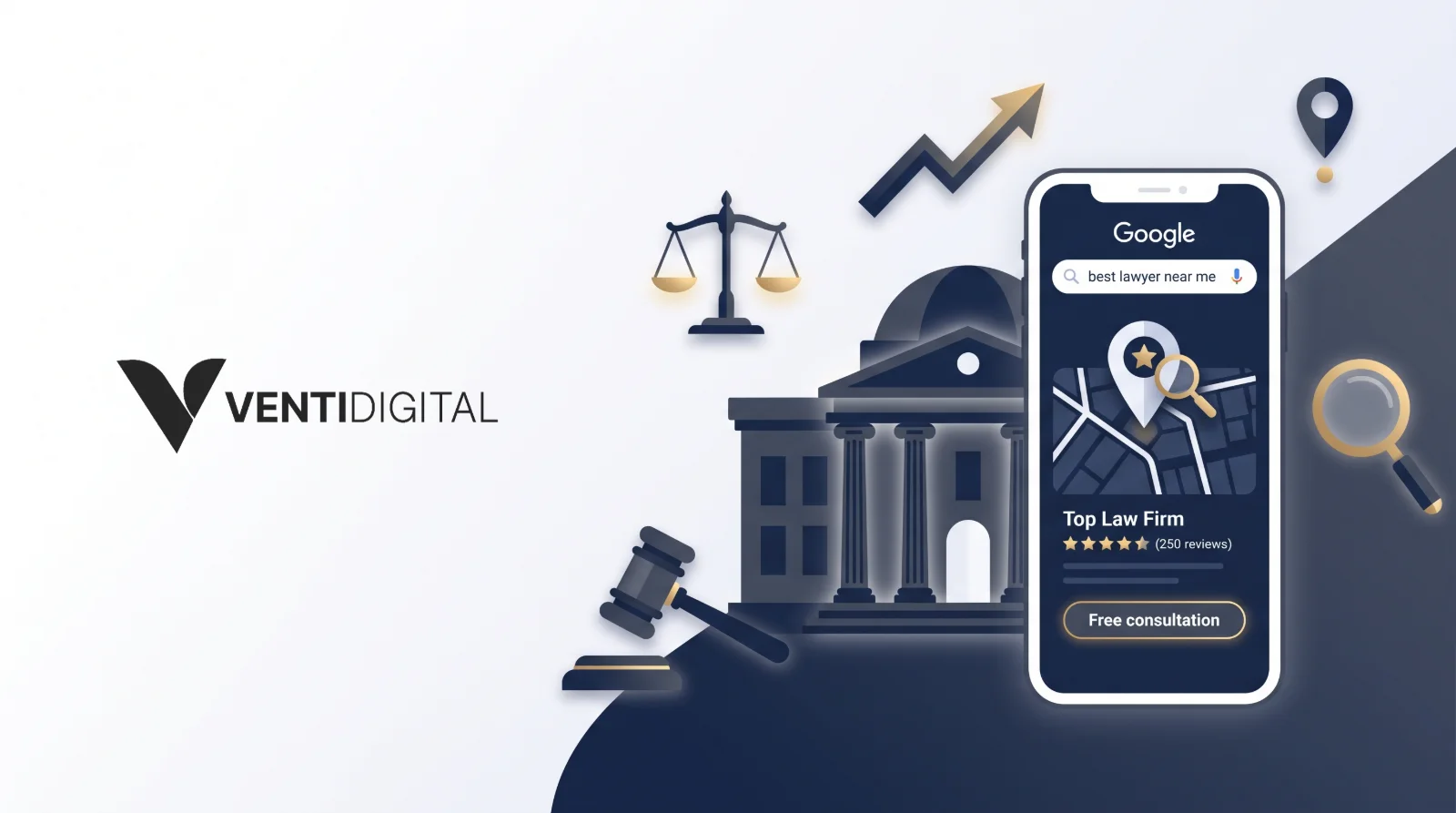
People who need a lawyer are usually facing something serious: a business dispute, a divorce, a criminal case, or a licensing problem. Many start by searching Google or asking ChatGPT, with queries like "how to sue for breach of contract" or "divorce lawyer in South Jakarta".
Law firms that appear with clear information at that moment have a strong chance of being contacted. The challenge is that advocates in Indonesia work under a code of ethics that restricts advertising and publicity. This guide covers how to build visibility in search and AI engines without crossing those lines.
Key Takeaway: What Does Safe Law Firm SEO Look Like?
Safe law firm SEO rests on information and education, not attention-seeking advertising. The focus is on practice area pages that explain legal problems and processes, factual lawyer profiles, legal content that helps readers understand their situation, accurate Google profiles, and client confidentiality at every step.
Promotion Limits in the Indonesian Advocates' Code of Ethics
The 2002 Indonesian Advocates' Code of Ethics (KEAI) addresses promotion in Article 8. Two provisions matter most for digital marketing:
- Article 8(b): advertising solely to attract attention is prohibited, including signboards of excessive size or form.
- Article 8(f): advocates may not seek publicity for themselves through mass media about cases they are handling or have handled, unless the statement aims to uphold legal principles.
The code does not specifically address websites, blogs, or social media. Hukumonline's legal clinic notes that an advocate's blog could be seen as advertising or publicity seeking, with the final judgment resting on the Honorary Council of the advocates' organization. Article 8 has been enforced: in 2008, the Peradi Jakarta Regional Honorary Council issued a strong reprimand to advocates found to have breached Article 8(f) over a newspaper announcement.
Beyond promotion, advocates must keep professional secrecy, as required by Law No. 18 of 2003 on Advocates and the code of ethics. This directly affects content: client names, case details, and documents must not be published without a clear basis.
Based on these rules, a safe pattern for digital content looks like this:
| Generally safe | Best avoided |
|---|---|
| Articles explaining laws, procedures, and legal rights | Content highlighting specific case wins to attract clients |
| Factual lawyer profiles: education, bar membership, practice areas | Superlatives like "the best and most successful lawyer" |
| Practice area pages explaining processes and required documents | Promised outcomes like "guaranteed to win" |
| Analysis of new regulations or court decisions for public education | Naming clients or case details without consent |
| Clear contact and office location details | Excessive design or messaging meant only to grab attention |
Note: This table is a practical guide, not legal advice. Interpretation of the code of ethics rests with your advocates' organization's Honorary Council. Consult senior colleagues or your organization if in doubt.
Why Google Judges Legal Content Strictly
Legal topics fall under YMYL (Your Money or Your Life) in Google's quality rater guidelines, because wrong information can harm someone's finances or rights. Google weighs E-E-A-T heavily: experience, expertise, authoritativeness, and trust.
For law firms, that means:
- The author or reviewer must be clear, ideally an advocate with their full name and practice area.
- Legal bases are cited specifically: the law number, article, or relevant court decision.
- Update dates are shown, because regulations change often.
- The firm's identity is easy to verify: address, contact details, and list of advocates.
Google's expectations line up with the spirit of the code of ethics. Content that is educational, accurate, and restrained tends to earn more trust from readers, search engines, and AI engines.
The Website Structure You Need
| Page type | Matches searches like | What it needs |
|---|---|---|
| Practice area page | "land dispute lawyer", "employment law services" | Problems handled, process overview, documents to prepare, expected timeline |
| Lawyer profile | "family lawyer in Surabaya" | Name, education, bar organization, languages, practice areas, publications |
| Office location page | "law firm in Kuningan" | Address, map, office hours, how to book a meeting |
| Legal guide | "how to file for divorce in Indonesia" | Step-by-step explanation with legal bases |
| FAQ page | "how long does a PKPU take" | Short, direct answers linking to full guides |
Also make sure every advocate and practice area has its own URL, pages load fast on mobile, and Schema.org structured data such as LegalService and Attorney is in place to clarify your firm's entities.
Content Strategy: Answering Real Legal Questions
People rarely search for "the best law firm". They search for a solution to their problem. Map content from those questions:
| Prospective client's situation | Example search | Matching content |
|---|---|---|
| Business dispute | "how to collect a debt from a company in breach" | Guide from demand letter to lawsuit |
| Family law | "divorce requirements for non-Muslims in Indonesia" | Procedure, documents, and competent court |
| Employment | "employee rights when laid off in Indonesia" | Explanation of rights under current regulations |
| Corporate | "how to set up a sole-shareholder company (PT perorangan)" | Requirements, official fees, and steps |
| Foreign investors | "PMA company requirements in Indonesia" | English guide for international clients |
A few writing principles:
- Answer the question in the first paragraph, then explain details and exceptions.
- Cite specific legal bases, and update articles when regulations change.
- Note that the article is general information, not legal advice for a specific case.
- Point to the next step, such as when to consult an advocate, with a link to the related practice area page.
Google Business Profile for Law Firms and Advocates
For searches like "lawyer near me", Google Maps results matter a great deal. Google's guidelines allow a profile for the office at each address, and also for individual practitioners: advocates who serve clients directly and can be reached at that office during stated hours.
Points to watch:
- Use the firm's official name, without added keywords like "best lawyer".
- One advocate needs one profile per location, not one profile per practice area.
- When replying to reviews, never refer to case details, even if the reviewer mentions them first. This is part of the duty of confidentiality.
AEO and GEO: When Prospective Clients Ask AI
Legal questions are among the most common questions people ask AI assistants, because they want to understand their situation before talking to a lawyer. To get your firm cited as a source:
- Write clear definitions and answers, such as "PKPU is..." in the first sentence.
- Use structures that are easy to extract: step lists, document tables, and Q&A sections.
- Keep entities consistent. Firm name, advocate names, address, and practice areas should match across your website, Google Business Profile, LinkedIn, and legal directories.
- Publish original analysis, such as commentary on new regulations or major decisions. This kind of content is valuable to readers and counts as publication aimed at upholding legal principles.
How to Measure Results
- Google Search Console: practice area keywords and legal questions that bring clicks.
- Google Business Profile: calls, direction requests, and website clicks.
- Google Analytics 4: conversions such as consultation form submissions, WhatsApp clicks, or phone clicks.
- Lead quality: record the type of matter prospective clients ask about from the website, to see which content brings the right clients.
Law Firm SEO Checklist
| Area | What to confirm |
|---|---|
| Code of ethics | No superlatives, promised outcomes, or publicity about client cases |
| Confidentiality | No client names or case details without consent |
| Pages | Every practice area and advocate has its own URL |
| Content | Articles cite legal bases, author or reviewer, and update date |
| Google Maps | Firm and advocate profiles follow Google's guidelines |
| Schema | Structured data for the firm and advocates is correct |
| Measurement | Form, WhatsApp, and phone conversions are tracked |
Conclusion
The code of ethics does not close the door on digital marketing. The approach that best fits the code, accurate, educational, and restrained information, is also the approach Google and AI engines value most. Law firms that consistently explain legal problems clearly are easier to find and more trusted by prospective clients.
If your firm practices in Indonesia, our approach for the legal sector is on our law firm SEO, AEO and GEO page (in Indonesian), or you can contact our team.
Frequently Asked Questions
Can advocates in Indonesia have a website and blog?
The Indonesian Advocates' Code of Ethics does not specifically prohibit websites. What it prohibits is advertising solely to attract attention (Article 8(b)) and publicity about handled cases (Article 8(f)). A website with firm information and educational legal content is generally safe, but the final judgment rests with the advocates' organization's Honorary Council.
Can we list clients or cases we have won?
It is risky. Highlighting handled cases to seek publicity can be seen as a breach of Article 8(f), and naming clients without consent conflicts with the duty of professional secrecy.
Does every advocate need their own Google Business Profile?
They can have one if they serve clients directly and can be reached at that office during stated hours. One profile per advocate per practice location is enough.
What content works best for law firms?
Guides that answer specific legal questions, such as procedures, requirements, and rights, with clear legal bases. This content helps prospective clients and builds authority with Google and AI engines.
Sources and References
- Hukumonline: Advocates May Not Advertise Carelessly (Indonesian)
- Hukumonline Legal Clinic: May Lawyers Have a Personal Blog? (Indonesian)
- Hukumonline: Indonesian Advocates' Code of Ethics (Indonesian)
- Hukumonline: Through Google, Another Way Lawyers Advertise (Indonesian)
- Google: Search Quality Rater Guidelines
- Google Search Central: Creating helpful, reliable, people-first content
- Google Business Profile Help: Guidelines for representing your business on Google
- Schema.org: LegalService, Attorney